

Three Out of Four Car Seats Are Installed Wrong. Is Yours One of Them?
Jump to:
When should we switch from an infant car seat to convertible car seat?
How long should we be rear-facing and why is it so important?
What are the most common mistakes with convertible car seat installations?
If you’ve made it through the newborn stage, chances are your infant car seat has started to feel…tight. Maybe your baby’s legs are scrunched, maybe you’re eyeing that bigger convertible seat sitting in a box in your garage, or maybe you’ve already Googled “when to switch from infant car seat to convertible car seat” at 2am.
Here’s the truth: the transition from an infant car seat to a convertible car seat is one of the most important safety decisions you’ll make—and one of the easiest to get wrong without the right guidance. According to the National Digital Car Seat Check Form database, 74% of car seats inspected in 2023 were improperly installed or used. And here’s the part that should stop you cold: 96% of parents believe their child’s car seat is installed correctly.
Let’s break down what actually matters (and what most parents aren’t told).
That gap — between confidence and reality — is exactly why we brought a certified Car Seat Technician to Bump to Baby Az.
When to Switch from Infant Car Seat to Convertible Car Seat
One of the most common questions parents ask is:
“When should I switch to a convertible car seat?”
The answer isn’t a specific age—it’s about height and weight limits.
Your baby is ready to transition when they:
Reach the maximum height or weight of their infant seat
Have less than 1 inch of space between the top of their head and the top of the seat
Are consistently uncomfortable or outgrowing the fit
👉 But here’s the key: switching seats does NOT mean switching directions.
Rear-Facing Car Seat Safety: Why It Matters
If you take one thing from this post, let it be this:
Rear-facing is the safest way for your baby to ride—period.
A rear-facing car seat supports the head, neck, and spine during a crash in a way forward-facing seats simply can’t.
According to best practices:
Babies and toddlers should remain rear-facing as long as possible
Most convertible car seats allow rear-facing until 2+ years old (often longer)
The move to a convertible seat is about giving your child more room to stay rear-facing longer, not turning them around early.
Convertible Car Seat Installation: The Most Common Mistakes
Let’s talk about where things tend to fall apart: installation.
Studies consistently show that a large percentage of car seats are installed incorrectly—and it’s not because parents don’t care. It’s because installation is confusing.
Here are a few common issues:
Car seat moves more than 1 inch at the belt path
Incorrect recline angle (especially for younger babies)
Misuse of LATCH vs. seat belt installation
Assuming “tight enough” instead of actually verifying
Proper car seat installation is critical—it’s the foundation of everything else.
Car Seat Harness Safety: The Everyday Details That Matter
Even with a perfectly installed seat, harness fit is what protects your baby on every ride.
Here’s what to check:
Straps are snug (you shouldn’t be able to pinch slack)
Harness is coming from the correct slot for rear-facing
Chest clip is positioned at armpit level
These small adjustments make a big difference in real-world safety.
Choosing the Best Convertible Car Seat for Your Family
Google will give you a million “best car seat” lists—but what actually matters is:
Your child’s size and growth pattern
Your vehicle type
Ease of correct, everyday use
Rear-facing limits
The “best convertible car seat” is the one you can install correctly and use consistently—not just the one with the best reviews.
Feeling Unsure? You’re Not Alone
Most parents are trying to figure this out using:
Half-read manuals
Social media tips
Conflicting advice from friends and family
It’s a lot. And it’s okay if you’re not 100% confident.
But this is one area where guessing isn’t worth it.
Want Expert Help with Car Seat Safety (Without the Overwhelm)?
If you’re:
Wondering when to switch from infant to convertible car seat
Unsure if your installation is correct
Overwhelmed by all the options
Wanting to keep your child rear-facing as long as possible
This is exactly why we created this class.
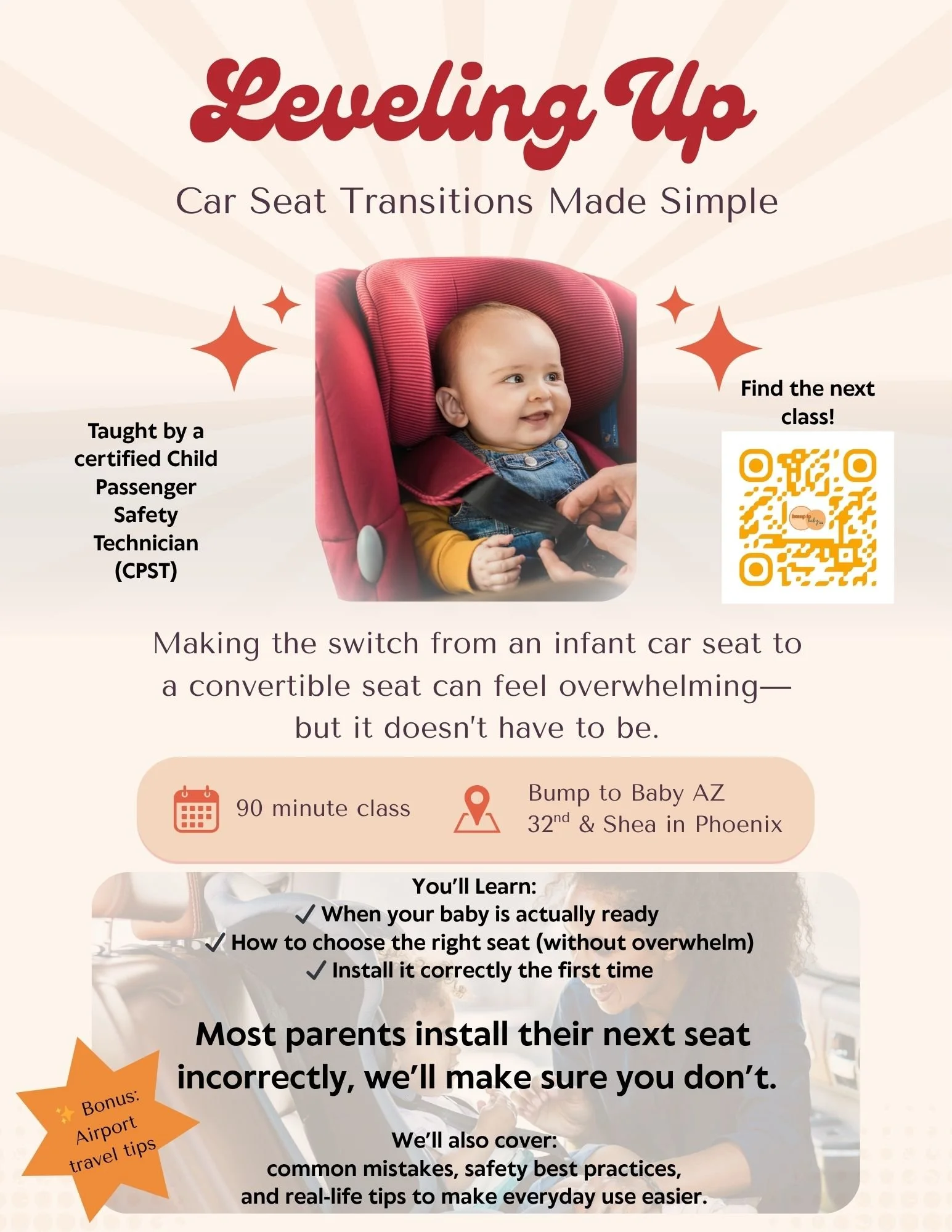
Leveling Up: Car Seat Transitions Made Simple
Join Elianna Gutman, CPST and owner of Most Precious Cargo, for a judgment-free, practical class that walks you through the transition step-by-step.
You’ll learn:
When your baby is truly ready to transition
How to choose the right convertible car seat
How to install it correctly (and know it’s right)
How to use it safely every single day
Bonus: how to travel with a car seat (yes, even on airplanes)
📍 Hosted at Bump To Baby AZ
👶 Perfect for parents approaching the limits of their infant seat
💑 Price is per couple
The Bottom Line on Car Seat Safety
Car seat safety doesn’t have to feel overwhelming—but it does require the right information.
Focus on the big three:
Rear-facing as long as possible
Proper installation
Correct harness fit
Everything else builds from there.
And if you’re ready to feel confident instead of “pretty sure”—we’ve got you.