

Movement Matters: Why Preparing for Labor Pain Changes Everything (No Matter Your Birth Plan)
Jump to:
What does the research say on movement and hands-on support during labor?
Do I still need to prepare for labor if I plan to get the epidural?
Are comfort measures essential in achieving the goal of an unmedicated birth?
Where can I take a comfort measures class in the Phoenix valley?
Whether you’re planning an epidural at the hospital or envisioning an unmedicated birth at a birth center with your midwife—there’s one thing both paths have in common:
Labor is still something you move through, not something that just happens to you.
And how you cope, position your body, and work with contractions?
That can shape everything—from how labor progresses to how you feel in the experience.
Two Different Plans… Same Need for Preparation
Let’s zoom out for a second.
If you’re planning an epidural:
You’ll still experience early labor (often for hours) before it’s placed
You may labor at home first
You might need to cope through contractions while waiting for placement or adjustments
If you’re planning an unmedicated or low-intervention birth:
Movement, positioning, and comfort measures are your primary tools
Your environment (home or birth center) is designed to support physiologic labor
Your ability to stay relaxed and responsive to contractions matters even more
Different plans.
Same truth: preparation matters.
The Physiology Piece No One Talks About Enough
Labor isn’t just about pain—it’s about progress.
And progress depends on:
Baby’s positioning
Pelvic space and alignment
Muscle tension vs. relaxation
Hormones (oxytocin vs. adrenaline)
When your body is tense or unsupported:
Contractions can feel more intense
Labor can slow down
Baby may have a harder time descending
When your body is supported and moving:
The pelvis can open more effectively
Baby can rotate and descend
Contractions become more productive (not just more painful)
What the Research Says About Movement & Hands-On Support
This isn’t just “crunchy birth advice”—there’s solid data behind it:
Upright and mobile labor positions are linked to shorter labors and a lower chance of cesarean birth (Cochrane Collaboration)
Continuous, hands-on support is associated with:
Reduced need for pain medication
Higher satisfaction with the birth experience
Lower rates of interventions overall
Non-pharmacologic comfort techniques (movement, pressure, positioning) help:
Decrease perceived pain intensity
Improve coping ability
Support optimal fetal positioning
Bottom line:
Your body works better in labor when it’s supported and moving.
If You’re Planning an Epidural…
Let’s be clear—epidurals are a powerful, valid option.
But they don’t replace the need for:
Coping tools in early labor
Positions that help baby descend before and after placement
A partner who knows how to physically support you
Strategies for when labor doesn’t follow a perfect timeline
In fact, using movement and comfort measures before an epidural can:
Help you labor more efficiently
Potentially make placement smoother (because baby is lower and better positioned)
Keep you calmer and more in control leading up to it
And even after an epidural?
Positioning (hello, peanut ball) still plays a huge role in progress.
If You’re Planning an Unmedicated or Birth Center Experience…
This is where comfort measures go from “helpful” to essential.
Without pharmacologic pain relief, your toolkit becomes:
Movement
Breath and rhythm
Counterpressure
Position changes
Nervous system regulation
But here’s the key—this isn’t about “toughing it out.”
It’s about:
Working with contractions instead of bracing against them
Creating space in the pelvis so baby can move
Reducing tension so pain doesn’t amplify
When you have tools (and have practiced them):
Contractions feel more manageable
You’re less likely to spiral into panic
Your support person becomes an active, confident part of your team
What Actually Helps During Labor (Across All Birth Plans)
These are the techniques that consistently make a difference:
Hip squeezes & sacral pressure → especially for back labor
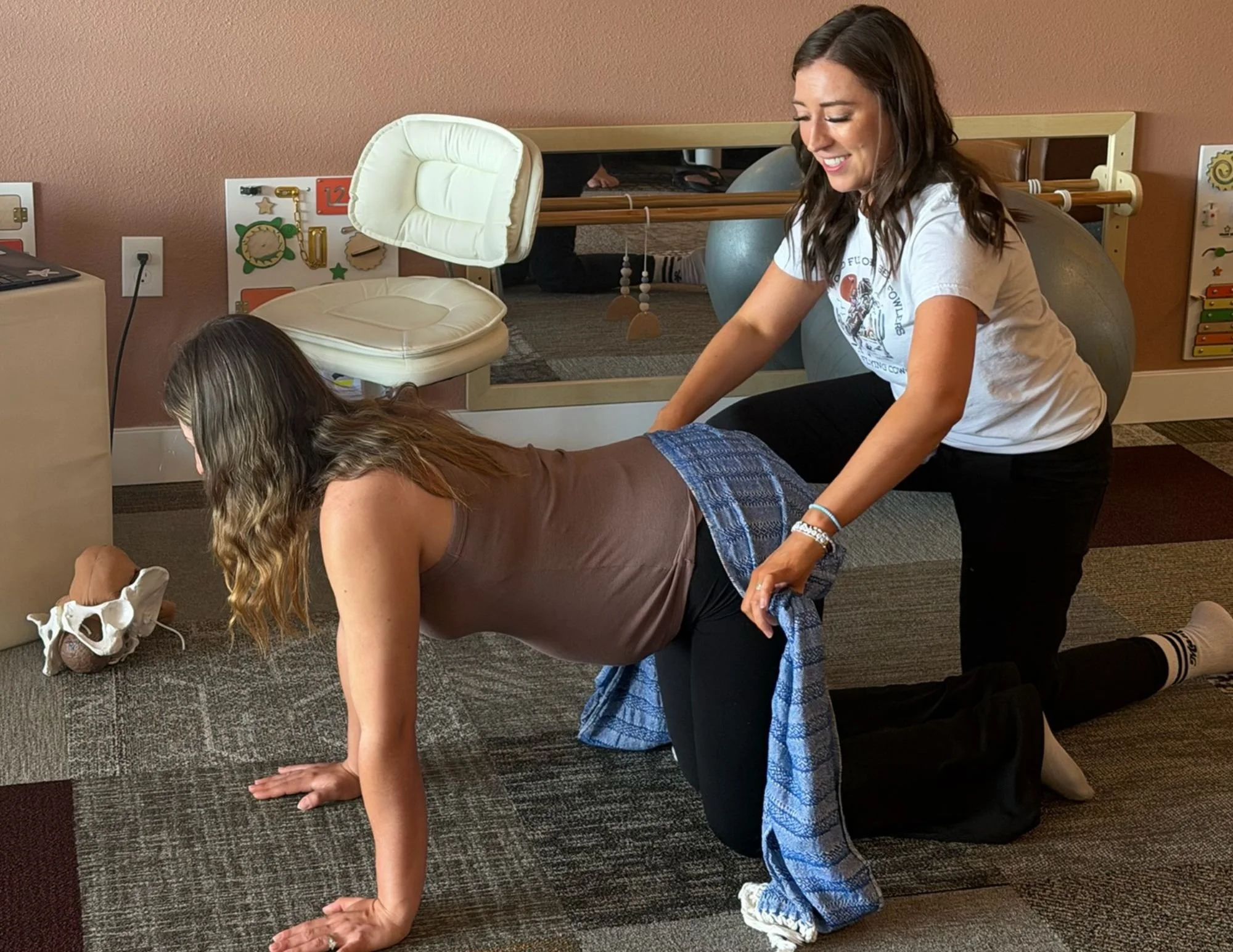
Rebozo work → supports baby’s positioning and relieves tension
Movement & position changes → encourage descent and rotation
Side-lying release & pelvic opening techniques → create space
Peanut ball positioning → supports progress (with or without an epidural)
Slow dancing & rhythm → regulate your nervous system
Ice practice → builds real coping skills for intensity
These aren’t just comfort tricks.
They’re functional tools for labor progress.
Why Practice Changes Everything
You can’t “logic” your way through labor.
It’s physical. It’s intense. It’s in your body.
That’s why practice matters:
Your body builds muscle memory
Your partner learns exactly what to do (and when)
You discover what actually feels good for you
So when labor hits, you’re not guessing—you’re responding.
A Different Kind of Birth Class
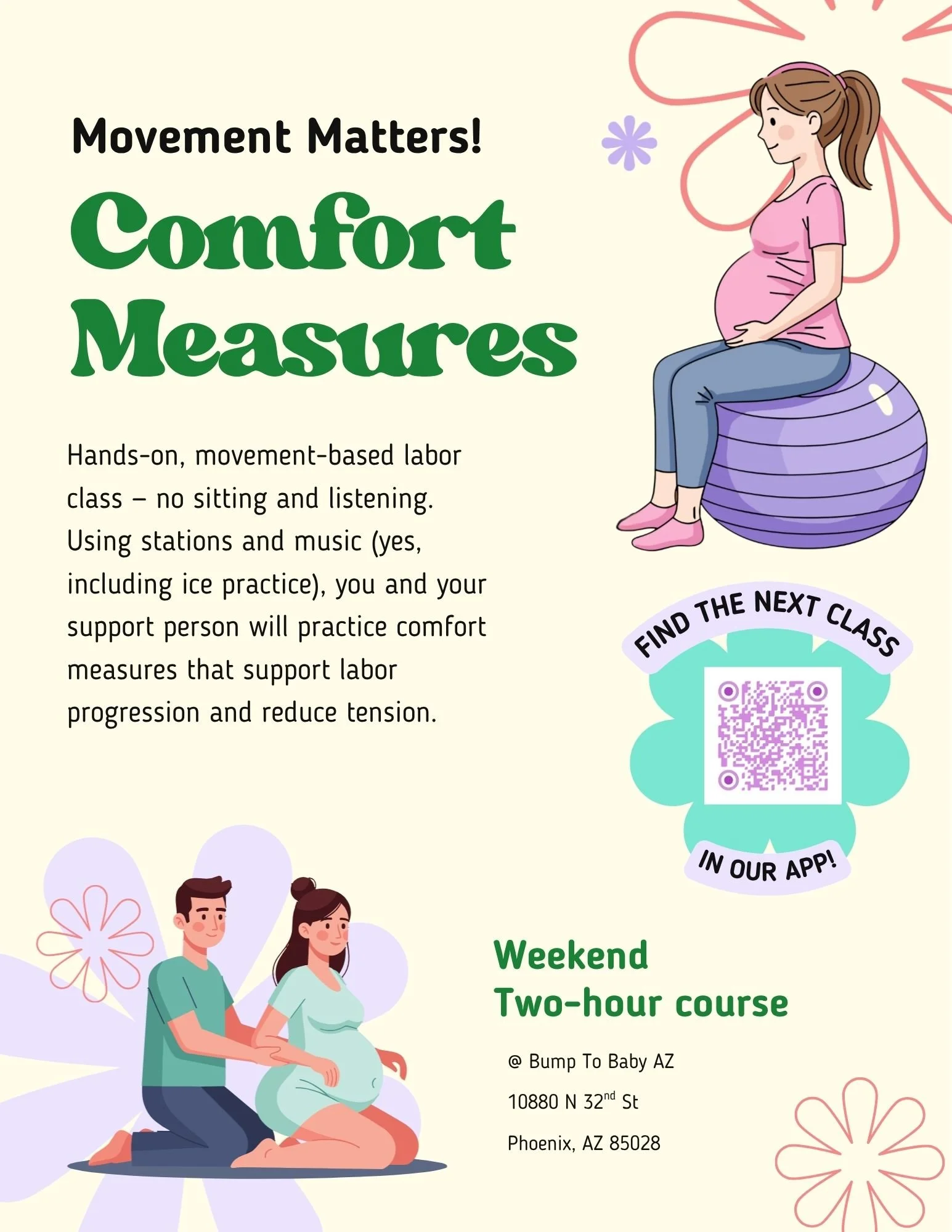
At Bump To Baby AZ, Movement Matters: Labor Comfort Measures is designed for both paths—medicated and unmedicated.
This isn’t a lecture-heavy class. It’s:
Fully hands-on and movement-based
Built around interactive stations
Focused on tools you’ll actually use in labor
You’ll practice:
Hip squeezes
Sacral & knee pressure
Rebozo techniques
Yoga & peanut ball positions
Side-lying release circuits
Slow dancing (yes—and it works)
Ice practice to simulate contraction intensity
All in a small, coached setting so you leave feeling confident—not just informed.
Who This Is For
Hospital births planning an epidural
Birth center or midwife-led care
First-time parents and seasoned ones who want a different experience
Partners who want to actually help (not just cheerlead)
The Bottom Line
Your birth plan might look different than someone else’s.
But preparation?
That’s universal.
Because whether you:
Get an epidural
Go unmedicated
Or land somewhere in between
Your body still has to do the work of labor.
And having the tools to support it?
That changes everything.
Ready to Feel Prepared (Not Just Hopeful)?
Movement Matters: Labor Comfort Measures
📍 Phoenix, AZ
👩⚕️ Led by Lauren Murdock, RN, IBCLC (Labor Lauren)
👫 Designed for expecting couples
If you want practical tools, real practice, and a partner who knows exactly how to support you—
Comment “MOVEMENT” or head to our calendar to save your spot.