

Jump to:
Yes, you can start reading to your baby before birth
What do newborns get out of being read to?
What does early reading actually look like?
What skills are you really building?
Continue your early literacy understanding to help your baby develop
If you have a stack of board books sitting on the nursery shelf waiting for your baby to be old enough to appreciate them, I have some good news for you.
They are already old enough.
Actually, depending on where you are in your pregnancy, they might already be old enough for that too.
I know that sounds a little wild. But stick with me for a minute because the research on early literacy and language development is genuinely fascinating and it has some really practical takeaways for families at every stage.
It Starts Before Birth
Your baby can hear inside the womb starting around 18 weeks of pregnancy. By the third trimester they are not just hearing sound, they are listening. They are beginning to recognize voices, rhythms, and patterns.
Studies have shown that newborns prefer the sound of their mother's voice over any other voice from the very first hours of life. They prefer the language they heard in the womb over other languages. They even show recognition of specific stories read repeatedly during pregnancy.
That is not magic. That is neuroscience. Your baby's brain is already building the foundation for language before they ever take their first breath.
So if you want to start reading during pregnancy, go for it. It counts more than you might think.
The Newborn Who Cannot Possibly Be Getting Anything Out of This
Here is the thing new parents tell me all the time.
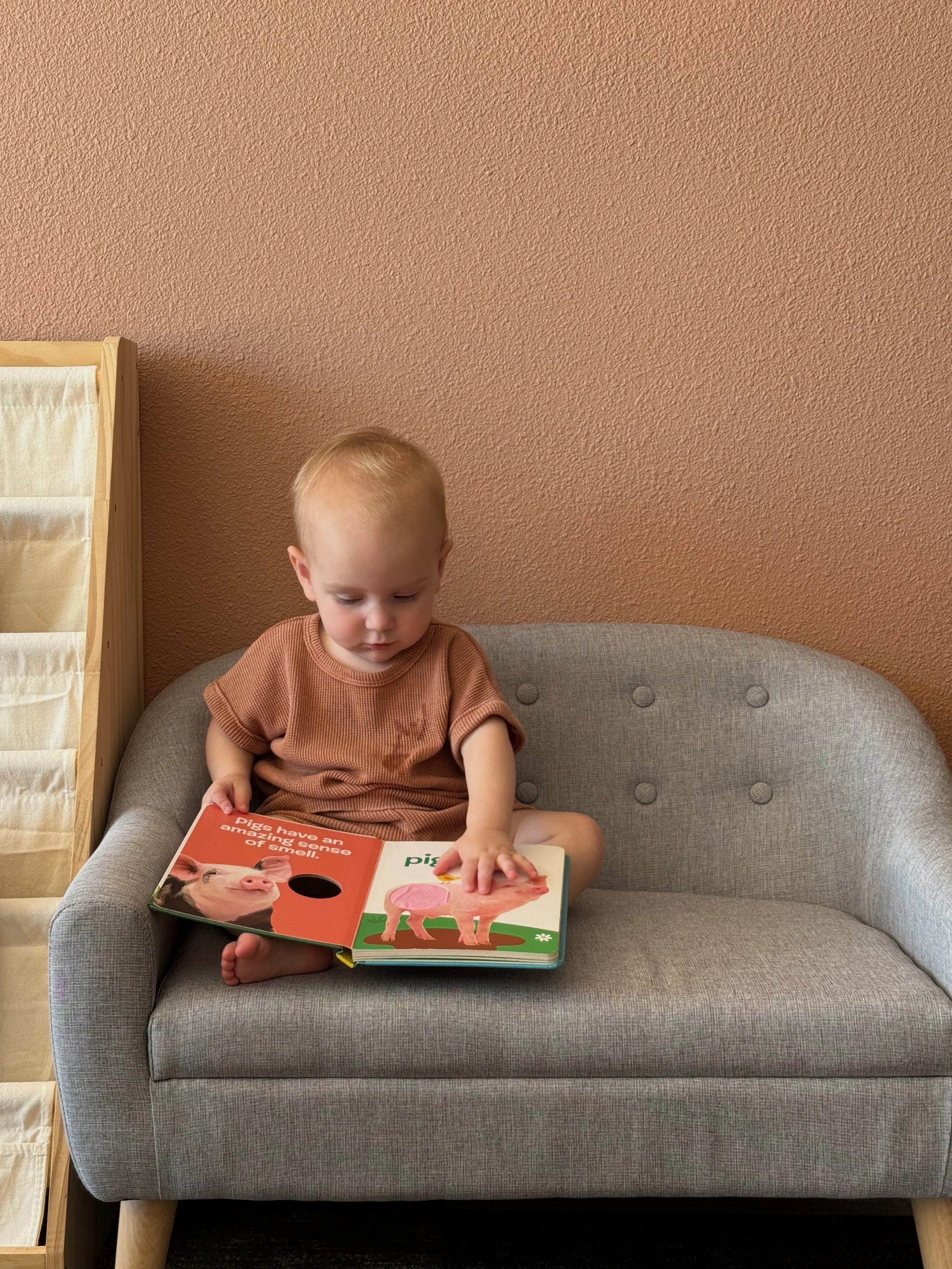
They feel a little silly reading to a baby who is just staring at the ceiling or actively trying to eat the corner of the book.
I get it. It does feel a little one-sided at first.
But what is happening in your baby's brain during those early months is extraordinary. Every word you say, every sentence they hear, every story you read out loud is building neural connections. Babies are born with billions of neurons and the connections between them are formed through experience. Language experience. Repetition. The sound of your voice talking and reading and narrating the world around them.
The American Academy of Pediatrics recommends reading aloud to babies starting from birth. Not because your newborn is following the plot. Because the exposure to language, rhythm, and the sound of your voice during those early months lays the groundwork for everything that comes later. Vocabulary. Comprehension. The love of books. School readiness.
All of it starts here, in these quiet moments that feel like they barely count.
What Early Reading Actually Looks Like
It does not have to be a production.
A few minutes is plenty. Board books with high contrast images for young babies. Books with simple repetitive text. Anything you genuinely like reading because your baby is listening to your voice as much as the words.
For newborns, try reading during a calm alert period when they are awake and settled. Make eye contact. Let them look at the pictures even if they cannot focus well yet. Talk about what you see on the page.
For babies a few months old, start pointing to pictures and naming them. Pause and let them respond even before they have words. Their coos and wiggles are part of the conversation.
For babies closer to six months and beyond, let them hold the book, turn the pages, and yes, chew on it a little. All of that is developmentally appropriate and all of it is engagement.
There is no wrong way to read to your baby. The only thing that matters is that you do it.
What You Are Really Building
Early literacy is not about flashcards or getting a head start on academics. It is about the relationship between you and your baby built through shared attention and language. It is about a baby who grows up knowing that books are safe and warm and associated with the people they love most.
The children who arrive at kindergarten ready to learn are not necessarily the ones who had the most educational toys. They are the ones who were talked to, read to, and responded to from the very beginning.
You are already doing something that matters more than you know every time you open a book with your baby in your lap.
Want to Learn More in Person?
Early literacy and language development is one of the topics we cover in Baby U, our Friday morning class at our North Phoenix studio for babies 0 to 6 months. It is a four week cohort that runs throughout the year and covers the topics that matter most in those early months including development, movement, feeding, and connection.
If you love this topic and want to go deeper, we also love Baby Bookworms as a resource for families building early literacy habits from the very beginning.
The information shared here is not individualized advice. For personalized guidance please reach out to your provider or visit us at Bump to Baby AZ. We would love to meet you and your baby!